Geographic Scope: The Balearic Sea & The Wild Coast
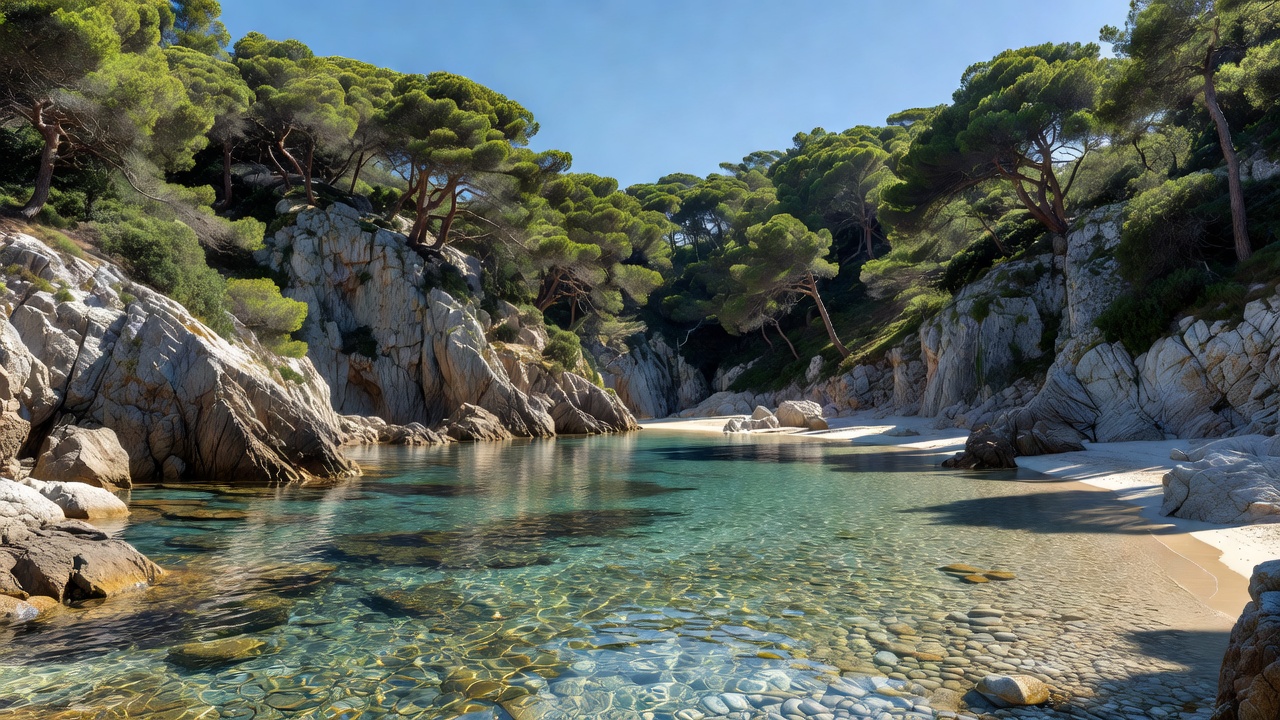
Spain's Mediterranean littoral extends over 1,600 kilometres from the French border at Portbou down to the Strait of Gibraltar. Among its most celebrated geological sectors is the Costa Brava ("Wild Coast") in Catalonia, alongside the Balearic archipelago of Mallorca, Menorca, Ibiza, and Formentera. Here, the maritime landscape transitions away from wide commercial urban sands into intricate granite promontories, pine-forested headlands, and sheltered coves known locally as calas.
Where the foothills of the Pyrenees meet the Mediterranean around the Cap de Creus peninsula, tectonic uplift and relentless wind erosion (driven by the northern Tramuntana wind) have carved striking rock formations out of dark schist and pegmatite. Further south, the coast softens into warm rose-granite cliffs fringed with Mediterranean maritime pines that dip directly into calm, crystal-clear shallows.
The Camí de Ronda Coastal Footpath
A distinctive feature of Spanish Mediterranean exploration is the Camí de Ronda (GR 92). Originally established in the nineteenth century for border guards to patrol the coastal border and prevent maritime smuggling, this historic footpath connects small fishing villages, fortified watchtowers, and isolated rocky inlets.
- Northern Sections (Cap de Creus to Begur): Characterized by rugged, high-elevation cliff paths, narrow stairs cut into sheer stone faces, and secluded gravel coves accessible only on foot.
- Central Sections (Platja d'Aro to Palamós): Features well-maintained stone walkways, arched tunnels through coastal headlands, and continuous views over turquoise swimming basins.
- Balearic Camí de Cavalls: On the island of Menorca, an equivalent 185-kilometre historic equestrian and walking path encircles the island, offering pristine access to untouched southern white-sand calas.
Marine Ecology & Posidonia Oceanica Meadows
The remarkable transparency and turquoise hue of Spain’s Mediterranean coves are largely attributable to vast submarine meadows of Posidonia oceanica (Neptune grass). This endemic marine plant filters suspended organic matter, oxygenates the water column, and prevents beach erosion by trapping sediment. In the Balearic islands, particularly between Ibiza and Formentera, Posidonia meadows are protected under strict international conservation reserves, and boat anchoring is rigorously monitored to prevent anchor drag damage.
Key Advantages
- Warm, tranquil waters ideal for swimming and distance paddleboarding.
- Extensive network of historical coastal paths (Camí de Ronda).
- Exceptional maritime gastronomy focused on fresh coastal catches and regional olive oils.
- Diverse landscapes ranging from rocky fjords to sheltered fine-sand calas.
Travel Considerations
- High visitor volume during peak July and August requires early morning arrival for secluded coves.
- Strict parking and vehicle access restrictions around protected marine parks.
- Limited shade along exposed cliff paths during mid-day summer hours.
Bathing Conditions & Planning
From late June through September, water temperatures along Spain's Mediterranean coast consistently range between 23°C and 27°C, offering ideal conditions for prolonged open-water activities without neoprene protection. For travellers seeking tranquility, visiting during June or September provides an optimal balance between warm sea temperatures and uncrowded coves.