The Atlantic Frontier: Scale and Hydrodynamics
Portugal’s extensive coastline is defined by its direct exposure to the North Atlantic Ocean. Unlike the enclosed, semi-still basins of the Mediterranean, the Portuguese littoral experiences continuous oceanic swells, substantial tidal ranges (often between 2.5 and 3.8 metres), and strong coastal upwelling. This physical oceanography creates an invigorating maritime environment characterized by cooler water temperatures, continuous surf breaks, and fresh oceanic air.
Geographically, the coast divides into two principal zones: the western Atlantic coastline (stretching from Minho in the north down through the Costa Vicentina to Sagres) and the southern Algarve shelf facing the Gulf of Cádiz. The western rim receives the raw power of Atlantic low-pressure systems, featuring dark slate and schist sea cliffs, while the southern margin is sheltered by Cape St. Vincent, where warmer currents and golden sandstone predominate.
Topographical Landmarks: Arches, Sinkholes, and Sea Caves
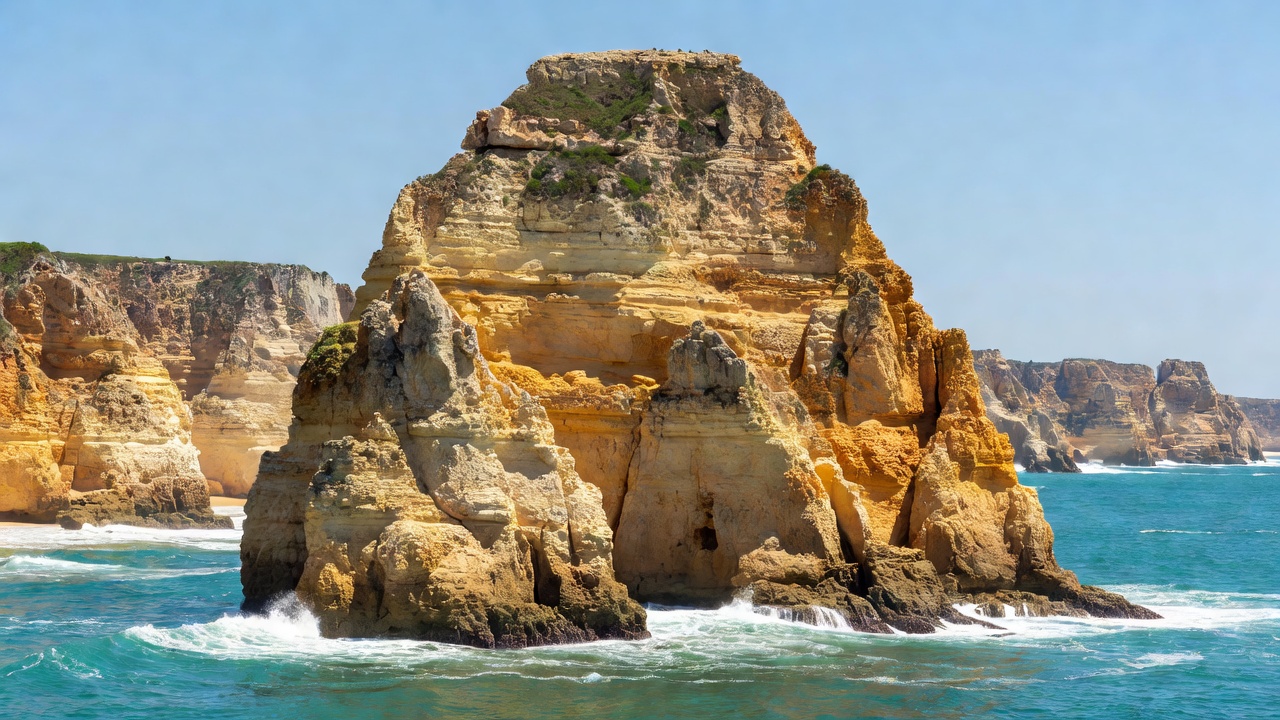
The southern Algarve between Lagos and Albufeira is renowned for its Miocene limestone formations. Continuous wave action and chemical weathering of soft carbonate rock have sculpted an intricate labyrinth of marine architecture:
- Sea Arches and Stacks: At Ponta da Piedade, towering vertical columns of ochre stone rise directly out of turquoise waters, carved by centuries of hydraulic wave shock.
- Karst Sinkholes (Algares): Dramatic roofless caverns, such as the famous Benagil cave, where collapsed ceiling domes admit circular shafts of natural sunlight directly onto hidden interior beaches.
- Expansive Dunes and Barrier Islands: Moving east toward Faro and Tavira, the shoreline shifts into the Ria Formosa natural park—a network of barrier islands and salt flats sheltering migratory wading birds.
The Rota Vicentina & Coastal Cliff Hiking
Along the western Alentejo and Vicentina Coast, travel shifts from sunbathing coves to extensive coastal trekking. The Fishermen’s Trail (Trilho dos Pescadores)—part of the Rota Vicentina network—runs directly along clifftop paths historically carved out by local coastal fishermen. The trail offers unparalleled panoramic views of nesting white storks (the only known location in the world where white storks nest on sheer marine sea stacks), untouched dune ecosystems, and secluded sand beaches reached only by steep wooden ladders.
Key Advantages
- Spacious, expansive fine golden sand beaches with ample room.
- World-class conditions for surfing, windsurfing, and bodyboarding.
- Comprehensive coastal walking trail infrastructure (Rota Vicentina).
- Moderate summer temperatures due to continuous ocean breezes.
Travel Considerations
- Water temperatures rarely exceed 19°C–21°C, requiring wetsuits for long swims.
- Strong undertows and rip currents necessitate swimming only at supervised beaches.
- Soft sandstone cliffs are subject to natural erosion; sitting directly below rock faces is hazardous.
Seasonal Considerations & Ocean Safety
Ocean swimming along Portugal's Atlantic shore demands constant situational awareness. Tidal shifts can cut off access to small coves within hours, and rip currents are common across wide surf beaches. Official bathing season runs from June 1 to September 30, during which municipal lifeguards monitor major designated zones marked with colour-coded safety flags (green for safe, yellow for caution, red for swimming prohibited).