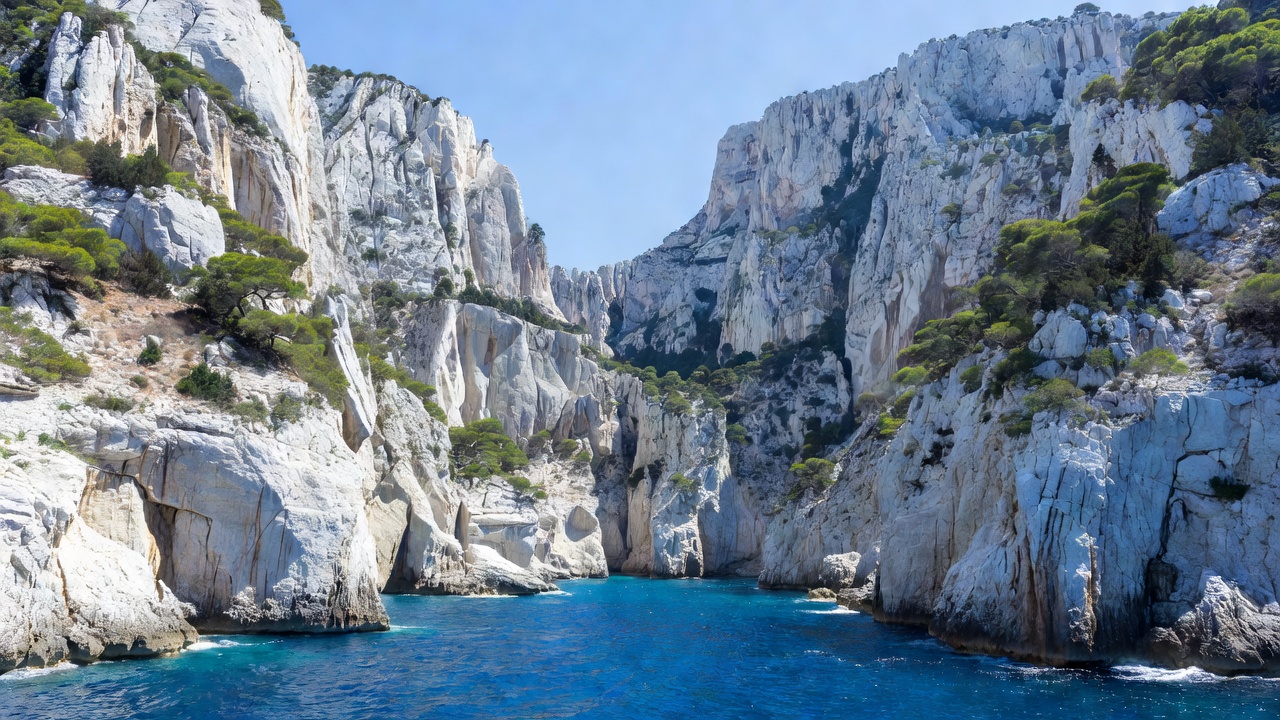
Geomorphology of the Provençal Littoral
The Mediterranean coast of France presents two strikingly distinct geomorphological profiles. To the west, the Gulf of Lion features expansive sandy barrier spits and low-lying coastal lagoons in the Camargue. Moving eastward past Marseille, the terrain shifts abruptly into the monumental Urgonian limestone massifs of the Calanques National Park, before transitioning into the crystalline schist cliffs of the Massif des Maures and the steep Maritime Alps that drop directly into the sea along the Côte d'Azur.
The Calanques represent ancient geological river valleys carved during periods of glacial regression when sea levels were over one hundred metres lower than present. Following the subsequent rise of global sea levels, these deep gorges were flooded by the Mediterranean, forming dramatic marine fjords characterized by near-vertical white limestone walls, intense cobalt water, and a sheltered microclimate home to specialized coastal vegetation.
Navigating the Calanques: Access Regulations & Protection
Due to the environmental fragility of the Calanques and significant summer wildfire hazards in Provence, the national park authority enforces strict terrestrial and maritime regulations between June and September:
- Wildfire Risk Access Restrictions: Terrestrial trail access across the Calanques massif is monitored daily via regional prefectural color-coded risk maps. High wind conditions frequently result in total park closures to hikers.
- Reservation Quotas for Sensitive Inlets: Popular coves, such as Calanque de Sugiton, enforce a free pre-registration quota system during peak summer months to limit trampling of native flora and prevent shoreline degradation.
- Maritime Approach Limitations: Motorized vessels are subject to strict distance limits and engine power caps within inner calanque waters, with non-motorized sea kayaks and small solar-electric shuttles serving as the primary sustainable watercraft.
The Corniches of the Riviera: Elevation & Panorama
Further east toward Monaco and the Italian frontier, coastal travel is defined by the historic Trois Corniches—three scenic roadways perched at different elevations above the sea (Basse Corniche along the coastline, Moyenne Corniche carved halfway up the cliffside, and Grande Corniche tracing the mountain ridgeline over 500 metres above sea level). These routes offer dramatic bird’s-eye vistas of steep capes such as Saint-Jean-Cap-Ferrat and Cap d'Ail, where small pebble coves nestle beneath sheer stone precipices.
Key Advantages
- Dramatic juxtaposition of white limestone walls and deep turquoise waters.
- Integrated coastal railway network providing easy train access to seaside coves.
- Extensive regional bus networks traversing the coastal corniches.
- Rich literary and artistic heritage preserved in historic seaside villages.
Travel Considerations
- Strict summer park closures during elevated wildfire risk warnings.
- Hikes into deep calanques require carrying abundant drinking water; no services exist within the park.
- Narrow pebble beaches can become intensely crowded during high season.
Logistical Realities & Public Transit Efficiency
Unlike many remote coastal destinations, the French Mediterranean coast features superior public transit integration. The regional TER rail line runs directly along the water's edge between Marseille, Toulon, Cannes, Nice, and Ventimiglia, offering direct foot access to numerous secluded pebble beaches and scenic coastal walking trails without the stress of limited clifftop vehicle parking.